The photo taken by photographer Bryan Thomas of the oysters
sitting atop the deck of an oysterman's vessel may at first seem like an
average photo, but it actually holds a strong message about how quickly people
can forget about tragedies such as the BP oil spill in the gulf when it doesn't directly affect them. The oysters pictured are a deep black, likely a
discoloration caused by the oil that seeped into the gulf two years ago. At the
time of the spill, America was in uproar over how something so substantial and
impactful on the environment could be allowed to occur. Thousands of photos of
animals and entire ecosystems coated in oil flooded the media, invoking rage
from everywhere. But eventually the hype died down, and people quickly lost
interest in the cute little birds and fish that were covered in sludge. But how
many people were interested in the lives of the people who were affected by this
travesty? I certainly don’t remember much being said about the fishermen whose
livelihood was taken from them when the local sea life population plummeted. This
photo reminds us that even two years later, despite a lack of interest in the
issue, the repercussions of the oil spill have yet to even come to close to
being resolved. Men and women who struggled to make ends meet with such a
highly volatile career are facing terrible odds when they go out to try to
bring in enough catch to support their families. The marine life they so
greatly depend on for income will take decades to recover to their previous
levels, but the people of America turn a blind eye on their plight because
bigger and better things have surfaced in the mass media that are newer and
more interesting. A photo of a distraught fisherman would be successful in
showing people that the problems aren’t over, but Bryan Thomas goes right to
the source with his photo, showing that even the simple mollusk hasn’t made a
recovery, and thus the struggle goes on for those people who must work twice as
hard as they even did to achieve one third the success. His entire collection
of photos makes people stop and think about how just because we can’t see something doesn't mean it doesn't exist. If Americans can’t respond to problems facing
their own people, and continue to support them when they need it the most, how
can we ever be expected to do so for global problems that seem so far away?
Friday, September 28, 2012

Eyewitness Aleppo: 'The city is doomed'
 This
picture does more than simply show two young boys crying. It tells a story of
these people’s lives and how they have to live each and every day. They live in
fear of being killed each day. They have to constantly watch the sky in hopes
that they can evade an airstrike and along with that death. The blood in the
image shows the continuous harm that the bombings are causing the residents and
how there are always causalities. The look of fear on the boy young boys faces
impacts the viewer to see just how serious this issue is. Not only are adults
and older people getting injured and killed but also the young population. The
boy’s facial expression symbolizes the situation as a whole as bloody, full of
pain, and negative on the residents. These people’s lives have been changed
because of this situation and they went from living how they should be to
living in fear from day in to day out. Below the image also says, “and the odds
become worse with time”. These few words make you stop and think more in depth
about this situation that is occurring in Syria. It looks bad now through this
image and is obviously causing harm to the citizens but is going to get worse
with time if no help is issued. Safety is not present for the citizens and the
only way they evade the effects of dropping bombs is by pure luck. At any
second a bomb could drop out of a plane down to the ground and kill many
citizens. This situation is having a seriously negative effect on the country.
People are fearful and live like that constantly. The population is decreasing
day by day with people losing loved ones. The country’s infrastructure is at
high risk with buildings being destroyed and the politics in an uproar. Like
the title says, ”The city is doomed”.
This
picture does more than simply show two young boys crying. It tells a story of
these people’s lives and how they have to live each and every day. They live in
fear of being killed each day. They have to constantly watch the sky in hopes
that they can evade an airstrike and along with that death. The blood in the
image shows the continuous harm that the bombings are causing the residents and
how there are always causalities. The look of fear on the boy young boys faces
impacts the viewer to see just how serious this issue is. Not only are adults
and older people getting injured and killed but also the young population. The
boy’s facial expression symbolizes the situation as a whole as bloody, full of
pain, and negative on the residents. These people’s lives have been changed
because of this situation and they went from living how they should be to
living in fear from day in to day out. Below the image also says, “and the odds
become worse with time”. These few words make you stop and think more in depth
about this situation that is occurring in Syria. It looks bad now through this
image and is obviously causing harm to the citizens but is going to get worse
with time if no help is issued. Safety is not present for the citizens and the
only way they evade the effects of dropping bombs is by pure luck. At any
second a bomb could drop out of a plane down to the ground and kill many
citizens. This situation is having a seriously negative effect on the country.
People are fearful and live like that constantly. The population is decreasing
day by day with people losing loved ones. The country’s infrastructure is at
high risk with buildings being destroyed and the politics in an uproar. Like
the title says, ”The city is doomed”. Too Young
War images tend to have extremely powerful messages behind them and tend to also be extremely powerful. However, a war image that subtly shows the psychological effects of war on children is pure rhetoric. In the image that I selected, a boy stands next to a life size war figurine, pretending to look down the barrel of the gun. This picture has a deep meaning, that is not fully unlocked when looking at its surface. All this boy knows is that G.I. Joe is an awesomely cool super soldier that is practically invincible and kills bad guys. However, war is not something that should be taken so lightly. Little does that young boy know that the soldier he is portraying will probably end up fighting on the front lines, or being killed in action due to the harshness and brutal reality of war. Nor does this boy realize that, while honorable, growing up dreaming of fighting for your country tends to waste talents and futures of those who do not want a true military life. This young man wants to be a super soldier, so he thinks he will be a super soldier.
This picture was taken at an army recruitment conference in 2004, making it all the more likely that this child truly does want to grow up and fight for our military. Children at an army recruitment camp believe that the war will be like their favorite TV show and that they will join the army, get a gun, and kill bad guys. They are too young to truly understand what actually goes on. There is no circumstance in which going to war is pleasurable or worth it. This image displays that going to war will be profitable and fun, when in fact the harsh reality is that you will probably end up dying if you are on the front lines. This boy has been brainwashed into thinking that fighting for America is the most honorable thing that a man can do, and unfortunately he is wrong.

This picture was taken at an army recruitment conference in 2004, making it all the more likely that this child truly does want to grow up and fight for our military. Children at an army recruitment camp believe that the war will be like their favorite TV show and that they will join the army, get a gun, and kill bad guys. They are too young to truly understand what actually goes on. There is no circumstance in which going to war is pleasurable or worth it. This image displays that going to war will be profitable and fun, when in fact the harsh reality is that you will probably end up dying if you are on the front lines. This boy has been brainwashed into thinking that fighting for America is the most honorable thing that a man can do, and unfortunately he is wrong.

Childhood Wonder
 This image invokes a sense of wonder and
exploration. Through the activities the
boys are doing and the environment they are in, the viewer catches a glimpse of
childhood, possibly their own, and a moment of discovery for these boys. One
boy is busy discovering an unknown object in the sand while his brother is
learning how wet sand reacts if he throws it in to ocean water. This shows just a small part of these boys’
childhood when they are developing. As
kids are young, they are developing and learning things through their
environment. The viewer feels as if they
want to be right there, learning what these two are learning because of the
overwhelming comprehension of curiosity emoting form this image. This image is also relaxing to look at. The beach is such a common vacation spot for
so many people, and one can relate to this scene. Whether they remember doing this with their
siblings or just watching other children doing this on the beach. This leaves the viewer with a sense of
comfortable familiarity. People are
relaxed when they are surrounded by something that they are familiar with and
comfortable with. This comfortable
feeling adds to the sense of curiosity.
This is because, without the comfortable feeling, the viewer would not
be able to relate to these boys. The
relations would not connect because they would most likely not get that sense
of wonder without the past experience of a beach. They would not be curious as to what the boys
are doing or discovering. The two
feelings coming from this image work together to portray a feeling together,
without one, you would lack the other feeling.
The image of the two boys playing in the sand and ocean leaves the viewer
with a comfortably familiar sense of wonder and exploration
This image invokes a sense of wonder and
exploration. Through the activities the
boys are doing and the environment they are in, the viewer catches a glimpse of
childhood, possibly their own, and a moment of discovery for these boys. One
boy is busy discovering an unknown object in the sand while his brother is
learning how wet sand reacts if he throws it in to ocean water. This shows just a small part of these boys’
childhood when they are developing. As
kids are young, they are developing and learning things through their
environment. The viewer feels as if they
want to be right there, learning what these two are learning because of the
overwhelming comprehension of curiosity emoting form this image. This image is also relaxing to look at. The beach is such a common vacation spot for
so many people, and one can relate to this scene. Whether they remember doing this with their
siblings or just watching other children doing this on the beach. This leaves the viewer with a sense of
comfortable familiarity. People are
relaxed when they are surrounded by something that they are familiar with and
comfortable with. This comfortable
feeling adds to the sense of curiosity.
This is because, without the comfortable feeling, the viewer would not
be able to relate to these boys. The
relations would not connect because they would most likely not get that sense
of wonder without the past experience of a beach. They would not be curious as to what the boys
are doing or discovering. The two
feelings coming from this image work together to portray a feeling together,
without one, you would lack the other feeling.
The image of the two boys playing in the sand and ocean leaves the viewer
with a comfortably familiar sense of wonder and exploration
Future Fate of Lost Generations

Mankind is ushering a new era into the world we call Earth, where pollution is have major repercussions on the environment. This age of selfishly and knowingly creating pollution is destroying the environment and causing major impacts on not only society, but also thousands of species of organisms around the world. While mostly all of this is preventable or reversible, most of the society does not care or know about the negative impact they are causing for themselves and future generations.
The
picture invokes a feeling of hate as one sees two kids that are prevented from
going to the beach by some force field. For people who have grown up near the
ocean, they realize the importance the ocean has in their lives. The ocean has
been a sense of freedom, meditation, nature, and life, where people of all age,
sex, and nationality can harmonize together under the rolling waves of the
ocean. However, depicted are two kids that cannot go to the ocean because the
ocean is now polluted from past generations of uncaring people. What infuriates the viewer more, as they look
at the picture and realize the advanced stage society is in, able to project
force fields over not safe places such as this beach. This shows that even with
the technology of the future, if we, as a society, destroy the environment,
future generations will not only have to carry our burdens, but not have a way
to reverse the detrimental impacts past generations have had on the planet.
The
picture invokes a sense of uneasiness because society knows that about the
pollution it causes, however, due to obsessions and greediness, society cannot
cease its consumption of resources, thus driving the next generation to what is
depicted in the picture, unable to enjoy the same comforts past generations
have had. This pollution and consumption of resources is to be assumed by
society to only have detrimental changes in monetary gain, however, most do not
realize that the consumption of these resources affects the fate of the entire
globe.
Ocean picture

It’s one thing to talk about nature
and how amazing it can be, but it’s another thing entirely to see it. When looking at a photo like this one from a
surf competition off the coast of Tahiti, it is almost impossible not to be in
awe of the wonders of our earth. From
the deep blues of the water to the wispy clouds of the sky, it truly is
breathtaking. And as amazing as nature
is, it continues to be destroyed by people who either simply don’t realize its
marvels or just don’t care because they are too busy worrying about their own
wellbeing.
The destruction environment is a
very serious issue, that, if we continue to allow to occur, may have some very
serious consequences, many of which we may not be able to fix. For one, our world is full of many other
living species in addition to just people.
If we want to make sure that we can continue to enjoy them and the many
amazing things that they do, we need to take care of their home. In addition to the other creatures that
inhabit our world, us humans also should have a very big interest in the
environment. If we continue to damage
it, many important parts of our lives, such as our health and many of the things
we do for recreation may be threatened.
In many major cities pollution has become so bad that people are
actually getting sick from the poor air quality. If our oceans are polluted, the beautiful
scenes that we enjoy at the beach such as the one shown may be no longer.
Overall, we need people to see
images like the one shown to really grasp the amazingness of our world and feel
compelled to take action to preserve it and its wonders.
On the precipice of the unknown

This photograph immediately struck me. Before even reading the title I knew what this image was about. The way this man has his arms stretched out reminded me instantly of Jesus bearing his cross and being crucified. This man is obviously bearing a great burden. The way his arms sag under the emotional weight of his trouble shows this without words perfectly. It almost looks like he is holding up the shoddy roof over his head. After reading what this image is about I learned that he really is holding his roof up by himself, if only barely. As i start to see past this strong image of a man bearing a burden other elements come into play. The sky is one of a bleak sleepy morning, a time of wondering what the day has in store. it looks like rain, but the viewer hopes it wont because we know that roof wont do much to cover this man who has clearly suffered. The water is dead and motionless, almost a mirror that causes great reflection in this man. His head is hung not only under this weight but in contemplation, possibly about something so trivial as the weather or something greater like if this sea before him will provide as it has so many times before. Then i see his gloves. Already i know he is a blue collar man but the gloves tie this image together for me. The man me see that he is a really just man. Hes cold. Hes learned through the years that gloves with help with preventing his hands from becoming raw from the hours of pulling up the ropes of his oyster nets. His hards are what he uses to provide for himself and possibly his family, so he must protect them. Lastly just the organization of this plays into the overall visual photo. This singular man is huge in the foreground, this maks him look important. The sea in the background seems so minuscule, its just a line, but in reality no matter the change this man can bring about by his hands he is really just a dot while the sea is what really matters in the end.
Thursday, September 27, 2012
It's a bird, it's a plane, it's a train

The production of railroads was one of the most prominent
developments in America during the Industrial Revolution. They promoted communication
across America and impacted society, the economy, and politics. The photo above
serves to remind audiences of the past grandeur of steam locomotives and
locomotives in general. Other forms of transportation, especially cars and
airplanes, have overshadowed the importance of locomotives in the nation’s
history.
The train illuminated against a pitch-black night sky
suggests how locomotives once illuminated a society that was previously in the
dark regarding technological advancements. The length of the train is depicted
to be never ending, as is locomotives’ historical impact as trains are still
used today, although less frequently. However, the appearance of the train
fading away as we look from the front of the train to the more distant train
cars emphasizes how there is less of a prevalence of locomotives in society.
The steam emitted from the locomotive emphasizes the life
and vitality it has managed to uphold throughout the years. The plane on the
screen is dull and the cars are parked to emphasize how stationary and
unexciting new forms of transportation can be viewed. In contrast, the steam
emphasizes that the locomotive is progressing on the track and it creates
motion in a photo that otherwise feels cluttered and has too many focal points.
With the variety of subjects in the photo, it is easy to overlook the train.
The predominance of other elements in the photo and the “disappearance” of the
train seem to be intentional as to mimic how people often forget about the
importance of locomotives in reality.
Noticeably the
people in the photo are not associated with the train, but with the cars that
they brought to the drive-in movie and the plane that they are watching on the
screen. The couple in the foreground with their arms around each other also
shows that people are often too distracted to appreciate something as common as
transportation. The photo is a reminder of our tendency to take everyday things
for granted.
A Special Place Called 'Home'

In this picture is a family's home that is a little bit out of the ordinary. Their bus-turned-home in the middle of a woodland area strays far away from the norm in today's society. With many of today's homes are traditional houses in developments or communities, this picture shows an example of a home that almost no one in our society would want to call their own home. The message it conveys is that a home is what one makes it and not dependent on social norms. Instead, the home is dependent on the people living in it.
Most people would choose to live in a traditional house with utilities and luxurious furniture, whereas the family in the picture shows their own unique spin of the term 'home' as a bus does not have those same qualities.
One kid is found swinging from a vine which shows how the family is embracing and incorporating nature into their home environment. The most amount of nature that is incorporated into the average home of our society is generally a modest garden and grass. Many tables and other supplies are also on the outside of their bus-house as if they treated the surrounding area just as much a part of their home as the bus. This is a significant difference between this family and modern society because families do not generally leave their belongings in their yard.
While part of the appeal of living in the wilderness might be the fact that there is a very low chance of someone stealing your stuff, it still speaks for itself that the family thinks highly of every part of their property. Overall, this picture is saying to make your home what you want it to be using whatever appeals to you and your family.
Oyster Photo Analysis

The fishing industry
is a tough area to be employed in. Among different fishing types, Oyster
fishing could be categorized as one of the most difficult and stressful jobs to
have. Photographs of sailors, boats, and
the conditions they do their work in are taken to show the viewer how tough it
is out at sea. This Photograph, in particular, can suggest many themes based on
its composition, color, and layout.
The most apparent
observation would be what is centered in the picture. The man grasping the two poles could suggest
he is on a boat, holding on for balance. Rhetorically however, this could
suggest the fisherman needing support from the harsh fishing season because of
the scarcity of oysters. The supports he is holding on to could signify the strength
of the boat and crew he is on, determined to stop at nothing to get their
catch.
The fisherman is also wearing a graphic hoodie
which can suggest that this character is a youthful oysterman. This photograph
could symbolize that even young men and women are hard at work at sea and yet
they do not perform and catch what was anticipated. His beanie cap and gloves
obviously show the harsh conditions this oysterman lives in and his low-hung
head expresses his feeling about it: He isn’t too excited and the blank, dull, and
endless ocean he looks upon suggests a feeling of loneliness which contradicts
the hope presented by the supports.
The overall theme of
this visual was to show concern for oyster fisherman. The endless and gray ocean presents the theme of hopelessness,
while the determined oysterman is supported by the theme of hope. The concern
for the youth, and concern for the blue collar men and woman who work in harsh conditions
is made more aware based on this photograph, which is strategic and successful.
Boyish Blood
This horrifying image of two wounded children dripping in fresh red blood really pulls at the heartstrings of the viewer. The fact that the injured victims are children creates a strong emotion of sadness and ultimately anger at the innocence of childhood and its' painful interruption.
The extent of the boys' wounds is evident though the observance of various factors in the photo. In addition to the two injured boys, four doctors are also present in the room with them. This 2:1 ratio shows the severity of the boys injury through all of the required medical attention. Also, the fresh red blood on the right boy's leg tells the audience the cut is fresh and continues to bleed.
It may be noted that this image was in a time of conflict or war because of the dress, and actions of the medical personnel. The doctor in the middle of the photo with blood caked on his apron is the main indicator of this conclusion. The bloody apron looks more dried and less red than the right boys bloody leg, implying the doctor may have been dealing with previous patients. Also, it looks as if the boys are being treated in some sort of makeshift hospital room. The tiny table of tools and medicines as well as the overcrowded operating table are indicators of this.
The audience may initially feel sadness at seeing the absence of mobility, energy, and boyish behavior in the children depicted, but this feeling morphs into something different. By having an image so drastically contrasted to that of what the standard image of young life is meant to be the audience's feelings change from sadness to anger. Anger at whoever harmed these children and replaced their boyish innocence with pain and suffering similar to that of a full grown soldier.

The extent of the boys' wounds is evident though the observance of various factors in the photo. In addition to the two injured boys, four doctors are also present in the room with them. This 2:1 ratio shows the severity of the boys injury through all of the required medical attention. Also, the fresh red blood on the right boy's leg tells the audience the cut is fresh and continues to bleed.
It may be noted that this image was in a time of conflict or war because of the dress, and actions of the medical personnel. The doctor in the middle of the photo with blood caked on his apron is the main indicator of this conclusion. The bloody apron looks more dried and less red than the right boys bloody leg, implying the doctor may have been dealing with previous patients. Also, it looks as if the boys are being treated in some sort of makeshift hospital room. The tiny table of tools and medicines as well as the overcrowded operating table are indicators of this.
The audience may initially feel sadness at seeing the absence of mobility, energy, and boyish behavior in the children depicted, but this feeling morphs into something different. By having an image so drastically contrasted to that of what the standard image of young life is meant to be the audience's feelings change from sadness to anger. Anger at whoever harmed these children and replaced their boyish innocence with pain and suffering similar to that of a full grown soldier.
Fast Cars and Hollywood Stars

This picture helps to show the relationship between actors
and nice things such as nice cars which is obvious through the title of
"Fast Cars and Hollywood Stars". This picture helps to support
this claim because this is a very nice and fast car during the time in which
the picture was taken and fast cars are usually nicer cars. When somebody thinks of Hollywood Stars they
think of fame and riches so this picture of a famous actor driving an expensive
and fast car during that time period supports that idea. Also, when there are Hollywood stars involved
the idea that they get to have fun and do just about whatever they want. This picture has a Hollywood star driving a
fast car on a racetrack as fast as he wants to go so that would be considered
fun and cool. When a big time actor
endorses a car in a photo or commercial such as the in the photo above they
usually get some sort of payment because it makes the consumer think that if
they get the same car that a big name star drove then maybe their life will be
as fun as that persons. When a star
endorses a product the entire point of it is to make a consumer buy that
product because the product might make them like the star that endorsed
it. Therefore, the combination of fast
cars and Hollywood stars made a lot of people inclined to buy that car or that
model of car in order to try and be as cool as the star in the photo. Finally, it is quite apparent by the photo
that when you match a Hollywood star and fast nice car, the appeal it has to
the audience is exactly what it was intended to be, desirable and wanted.
Tupac Picture
The picture of Tupac Shakur demonstrates the inspiration to achieve
greatness. The rapper once said in one of his songs to “keep your head up”, but
in the picture shown, his eyes lay deep down staring straight at the ground.
Because Tupac’s eyes are still open, this allows the audience to feel a sense
of hope and motivation. Shakur is able to take all emotion and thought into his
mind, and process it into poetic words that allowed him to become a great
artist. He stares into space, thinking about the fear of failure, but at the
same time the development of one's pride.
The deep meaning into this picture
is that it takes patience in becoming successful, but no matter how successful,
one cannot forget the things he or she once went through growing up. The
coloring in the picture contribute to the life cycle, on the left side, there
is Shakur’s shadow seen to allude to past obstacles faced in life. On the right
side a brighter shade is shown to demonstrate a higher belief of optimism. As far as credibility goes we read from left
to right so the shadow being on the left side allows the audience to have an emotional
feel before looking at the bigger picture: inspiration to succeed.
In conclusion, the picture allows
the audience to feel more independent because one can feel comfortable portraying
his or her own style. Shakur has a necklace, a bandana and a nose ring to
demonstrate individuality and distinctiveness allowing one to have a drive to succeed
in his or her own comfort zone. The
picture of Tupac gives off the vibe that life is a everyday struggle and we as
humans will make mistakes. More importantly, one must learn from his or her
mistakes and grasp that given opportunity to change for the better good.
Oystermen Still Plaugued
By September 19, 2010, there was an estimated two hundred million gallons of harmful oil spread out in the Gulf of Mexico. Before this oil spill disaster, Louisiana supported about forty percent of the nation's oysters. Today, it takes about 2 days to catch as much oysters as it once did in one morning. In the picture from CNN world news, there is a man named Arthur Etienne Jr. who is slouching over the side of his house or boat. it looks to me like he was once looking out into the vast ocean wishing he only had the oysters that he use to have and now, in the photograph, his head is down and his body impersonates depression. It says in the caption below the image, He worries that if oyster populations don't improve, he'll be forced to move. (Bryan Thomas). The color of the sky has a grayish stormy look to it, which is used to also darken the image and touch the readers emotions. The dark clouds give me a feeling of loss or calamity. The cause of the sky's colors causes the ocean water to be dark and depressing as well. Arthur Etienne Jr's clothing is also dark and almost shadowed, underneath the small enclosed roof. This portrays a feeling of anxiety and no hope. This oyster business is all that Mr. Utienne and other oystermen have and if they don't get the water cleaned up and start catching more oysters, they will have no other choice but to move everything that they have to another location and start all over. The last noticeable attribute to this picture is the amount of clothing that Arthur Etienne Jr. is wearing. He has on a jacket, gloves, beanie, and I would assume long pants to keep him warm. With his clothing and his body shape, Arthur looks cold and miserable. Not only is he cold feeling by the weather, but also he is cold feeling by the situation.
Laborers Have Choices Too
Lives
are filled with choices and even though someone may be part of a lower class
than you does not mean you have to force them into doing things. Simply give
them a choice and chances are they would be more compliable doing it under
their own will power.
When looking at the facial expressions and body
postures of the women workers in the background looking at the more upper class
looking young man lead stretches, it is very clear to say that they are not
looking forward to work nor are they happy about this man leading them in what
to do.
It seems as if the busloads of people that are probably standing in front of the stretching instructor are showing the same melancholy attitude toward the morning stretching routine. The situation would be better off by selecting a person of stature from the same class of laborers to lead the morning stretches. This way the workers feel less intimidated by a white man giving them orders. The people would feel more of a need to take part because it is something that is being recommended rather than forced.
It seems as if the busloads of people that are probably standing in front of the stretching instructor are showing the same melancholy attitude toward the morning stretching routine. The situation would be better off by selecting a person of stature from the same class of laborers to lead the morning stretches. This way the workers feel less intimidated by a white man giving them orders. The people would feel more of a need to take part because it is something that is being recommended rather than forced.
That
is how a large portion of society today acts as well. If something is forced
upon someone they will usually revolt, where as if they are given a choice they
are more likely to choose which would be more beneficial. This picture shows a
perfect example of that. The laborers know that they are a working class, so by
forcing them to do more work/activities they feel even more suppressed.
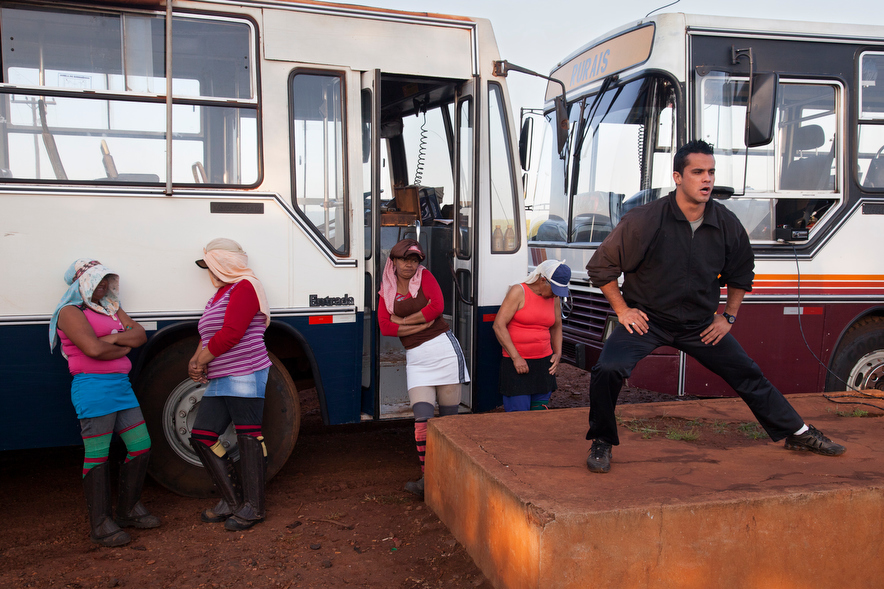
The
other reasoning behind why the women are acting the way they are is possibly
because they are feeling belittled. Since the higher power does not believe
they are capable of protecting themselves by stretching, they take it into
their own hands to ensure that the laborers are doing the right thing, which
once again forces people into doing something they may or may not want to do.
Subscribe to:
Posts (Atom)